
01
South India, 1503 CE
Birth and Family in Śrī Raṅgam
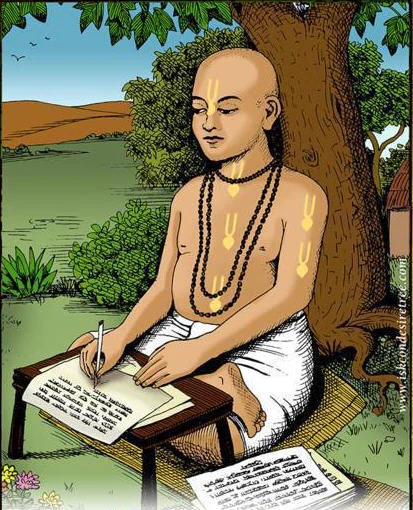
Śrī Gopāla Bhaṭṭa Goswāmī was born in 1503 CE in Śrī Raṅgam, the great South Indian temple town centered on the worship of Śrī Raṅganātha. His birth took place on the thirteenth day of the dark fortnight of the month of Pauṣa, into a learned Śrī Vaiṣṇava brāhmaṇa family shaped by the discipline and theology of the Rāmānuja sampradāya.
His father, Veṅkaṭa Bhaṭṭa, was a devoted worshiper of Lakṣmī-Nārāyaṇa and a respected brāhmaṇa connected with the Raṅganātha temple. The household was not casual in devotion. It was cultured, scriptural, hospitable, and deeply formed by the ritual life of South Indian Vaiṣṇavism. In that environment, the young Gopāla learned that worship was not a decorative part of life. It was the order around which life itself could be arranged.
Gopāla's wider family also mattered. His uncle Prabodhānanda Sarasvatī was a formidable scholar and later became one of his principal teachers. Through him, Gopāla inherited a demanding intellectual discipline: Sanskrit grammar, poetic learning, rhetoric, Vedānta, and devotional scripture. The combination is important. Gopāla Bhaṭṭa did not become a saint by rejecting learning, nor a scholar by cooling his devotion. His life would hold both together.
02
A Boy in Mahāprabhu's Lap
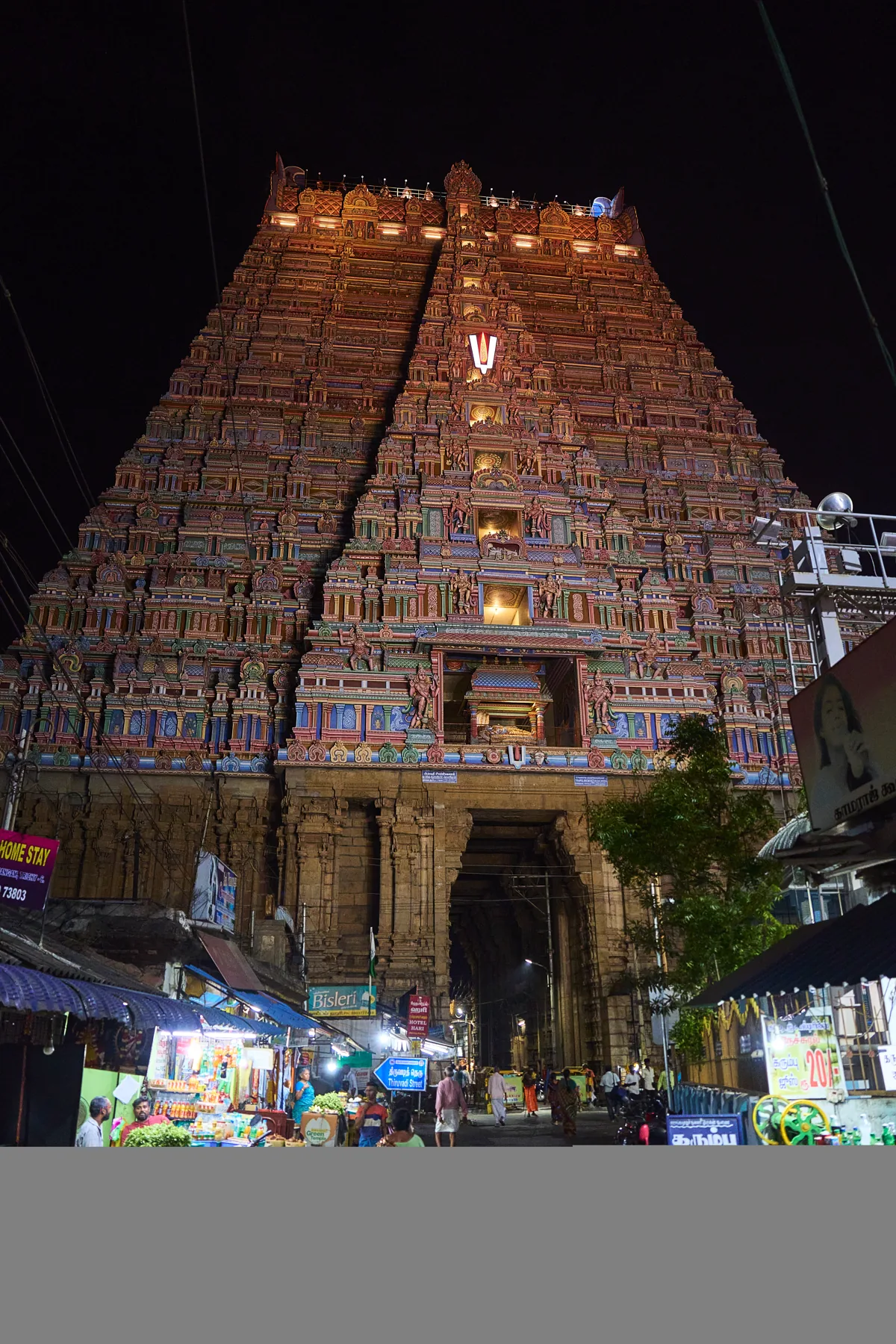
Around 1510 to 1511, during His South Indian pilgrimage, Śrī Caitanya Mahāprabhu arrived in Śrī Raṅgam. The visit took place during cāturmāsya, the four rainy months when wandering renunciates traditionally stay in one place. Veṅkaṭa Bhaṭṭa invited Mahāprabhu into his home, and Mahāprabhu accepted, remaining there through the season.
The meeting changed the family. Mahāprabhu's conversation with Veṅkaṭa Bhaṭṭa is remembered for its affectionate boldness. He asked why Lakṣmī-devī, the eternal consort of Nārāyaṇa, desired entry into Kṛṣṇa's rāsa dance, and why, despite her austerities, she could not enter it. Veṅkaṭa Bhaṭṭa answered that Kṛṣṇa and Nārāyaṇa are one Supreme Lord, but Mahāprabhu pressed the matter of mood. Entry into the intimate līlā of Vraja requires the disposition of the vraja-gopīs. Lakṣmī wished to enter without giving up her majestic identity. The door of Vraja opens by another kind of love.
Tradition remembers this exchange not as a cold debate but as a loving teasing that revealed the sweetness of Kṛṣṇa-bhakti to a Śrī Vaiṣṇava household. Veṅkaṭa Bhaṭṭa accepted Mahāprabhu's conclusion, and the family's devotional orientation turned toward the Gauḍīya understanding of Vraja.
For the young Gopāla, the impact was even more intimate. Mahāprabhu held him on His lap, called him near, fed him remnants of His own prasādam, and accepted the child's personal service. These details are not ornamental. In Vaiṣṇava memory, mahā-prasādam from the Lord's own hand is a life-shaping mercy. Mahāprabhu is remembered to have blessed Gopāla for a future of deep devotion and instructed him plainly: remain with your parents and serve them; after they leave this world, go to Vṛndāvana.
That instruction protected Gopāla from premature renunciation. His longing was real, but obedience was part of the path. The boy who had tasted Mahāprabhu's affection would spend years waiting, studying, serving his parents, and holding one question in his heart: when will I see Him again?
03
Education, Obedience, and the Ache of Separation
After Mahāprabhu left Śrī Raṅgam, Gopāla Bhaṭṭa did not immediately run north. He remained where he had been told to remain. He served his parents carefully and submitted himself to learning under Prabodhānanda Sarasvatī. This long middle period formed the kind of person who could later live in Vṛndāvana without becoming either sentimental or merely academic.
He studied Sanskrit grammar, kāvya, rhetoric, Vedānta, and the devotional śāstras. The sources remember his scholarship as exceptional, but the more striking feature is the direction of that scholarship. He learned for service. He learned so that conduct, worship, and theology could be protected from vagueness. He learned so that bhakti would have bones as well as heart.
At the same time, separation from Mahāprabhu grew inside him. The instruction to serve his parents was not a denial of his longing; it was the form his longing had to take. In Gauḍīya memory, this gives Gopāla Bhaṭṭa a particular tenderness. He is not portrayed as a restless renunciate escaping responsibility. He is a son who waits, a student who prepares, and a devotee whose desire matures under obedience.
04
The Journey North and Arrival in Vṛndāvana
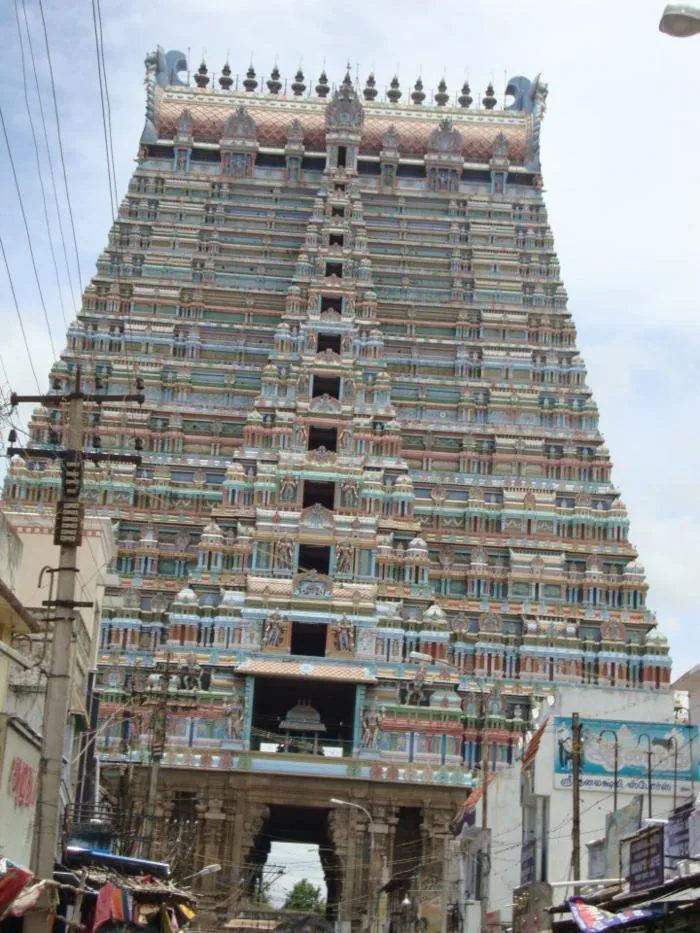
When his parents neared the end of their lives, they repeated Mahāprabhu's instruction to him: after we are gone, go to Vṛndāvana. After their passing, Gopāla Bhaṭṭa set out. His journey was not only geographical. He was moving from the temple culture of Śrī Raṅgam into the forest theology of Vraja, from Lakṣmī-Nārāyaṇa's majestic worship into the intimate service moods being unfolded by Rūpa and Sanātana.
On the way north, he went toward the region of the Gaṇḍakī river, sacred in Vaiṣṇava tradition as the source of śālagrāma-śilās. There, according to the traditional account, twelve śālagrāmas came into his water pot. Feeling unqualified to claim them, he returned them to the river. They came again. After this repeated sign, he accepted that they were being given for his worship and carried them with him.
When he reached Vṛndāvana, Rūpa Goswāmī and Sanātana Goswāmī received him as one of their own. They already knew of him through Mahāprabhu's care, and their reception was not formal politeness. It was the meeting of men assigned to the same work: to uncover Vraja, compose the theological and devotional literature of the sampradāya, establish worship, and model a life of intense renunciation joined to literary and devotional labor.
Mahāprabhu, hearing in Puri that Gopāla had reached Vṛndāvana, sent him personal cloth and renunciate garments as tokens of mercy. Gopāla received them as direct prasādam. From that point he lived in the manner of the Goswāmīs: no fixed home, little sleep, simple food, constant worship, study, writing, and remembrance. The twelve śālagrāmas were his treasure.
05
Śālagrāma Worship and the Appearance of Rādhā-ramaṇa
Gopāla Bhaṭṭa's worship of the twelve śālagrāmas stands at the center of his life because it reveals his heart. A śālagrāma is worshiped as the Lord Himself, complete and divine. Yet Gopāla longed to serve the Lord in a form with limbs, eyes, garments, ornaments, and a flute. His longing was not dissatisfaction with śālagrāma worship. It was the natural desire of a servant who wanted to dress and decorate the Beloved directly.
The well-known episode is told fully in the companion article on Rādhā-ramaṇa's appearance. A wealthy devotee came to Vṛndāvana and offered cloth and ornaments. Gopāla had no Deity form on which to place them. His round śālagrāmas could not wear what had been offered, yet the devotee insisted that the gifts remain. Gopāla accepted them and prayed.
The next morning, one of the śālagrāmas, the Dāmodara-śilā, had manifested as a small, exquisite form of Kṛṣṇa standing in tribhaṅga, with flute raised to His lips. Rūpa, Sanātana, and the Vṛndāvana Vaiṣṇavas came to see Him and named Him Rādhā-ramaṇa, He who gives pleasure to Rādhā. The name itself carries theology: even without a separate visible Deity of Rādhārāṇī beside Him, Her presence is understood to be inseparable from Him.
The Full Appearance Story
The miraculous transformation of the Dāmodara-śilā, the merchant's offering, and the temple tradition are told in detail in the companion article.
Read the Rādhā-ramaṇa Story06
Literary and Scholarly Contributions
It is easy to remember Gopāla Bhaṭṭa only through the miracle of Rādhā-ramaṇa, but his contribution to Gauḍīya Vaiṣṇavism is much broader. He helped give shape to the tradition's ritual body, its standards of conduct, and, indirectly, its philosophical architecture.
Hari-bhakti-vilāsa
In collaboration with Sanātana Goswāmī, Gopāla Bhaṭṭa stands behind the foundational Gauḍīya manual of Vaiṣṇava conduct, worship, vows, saṁskāras, and daily devotional discipline.
Sat-kriyā-sāra-dīpikā
This focused work addresses Vaiṣṇava life-cycle rites and ritual conduct, showing how devotional identity shapes birth, initiation, marriage, renunciation, and death.
Ṣaṭ-sandarbha Seed
Tradition credits his notes and theses as source material that Jīva Goswāmī later arranged and developed into the six Sandarbhas, the great theological synthesis of the school.
The Hari-bhakti-vilāsa is especially important. Gauḍīya Vaiṣṇavism emphasizes spontaneous devotion, rāga-bhakti, and the moods of Vraja, but no living community survives on feeling alone. It needs initiatory standards, purity practices, festival observances, procedures for worship, rules for conduct, and ways to transmit sacred life from one generation to another. Gopāla Bhaṭṭa's background in Śrī Vaiṣṇava ritual culture made him uniquely suited to help supply that structure without extinguishing Gauḍīya sweetness.
His relationship with Jīva Goswāmī's work is also significant. Jīva's Sandarbhas became the systematic philosophical backbone of the tradition, clarifying sambandha, abhidheya, and prayojana through careful reading of Bhāgavata theology. Traditional accounts describe Gopāla Bhaṭṭa as an earlier source of unsystematized theses that Jīva then arranged and expanded. In this way, Gopāla Bhaṭṭa's influence reaches into the deepest intellectual foundations of Gauḍīya thought, even where his name is not always foregrounded.
07
Guru, Disciple-Maker, and Bridge to Bengal
Gopāla Bhaṭṭa was junior in age to Rūpa and Sanātana, but his authority became substantial. His South Indian brāhmaṇa background, his learning, and his direct connection with Mahāprabhu gave him a particular role among the Six Goswāmīs. He came to be regarded as a principal initiating guru within that circle.
Two disciples are especially important for understanding his legacy. One is Gopīnātha, also remembered in connection with the priestly service of Rādhā-ramaṇa. In the traditional account, Gopīnātha's father had once received a blessing from Gopāla Bhaṭṭa and promised that any future son would be given for his service. Years later, the boy came to Vṛndāvana and remained connected with Rādhā-ramaṇa's worship. Through this line, the service of the Deity continued as a living household sevā.
The other is Śrīnivāsa Ācārya. His role in carrying the Goswāmīs' manuscripts from Vṛndāvana toward Bengal and Orissa was decisive for the spread of the tradition. Without the transmission of these writings, the literary treasure of Vṛndāvana could have remained geographically confined. Through Śrīnivāsa, Narottama Dāsa Ṭhākura, and Śyāmānanda Prabhu, the work of the Goswāmīs entered the devotional bloodstream of eastern India.
Gopāla Bhaṭṭa therefore stands at a hinge point. Behind him is Śrī Raṅgam, Rāmānuja's ritual inheritance, and Mahāprabhu's personal mercy. Around him is Vṛndāvana, Rūpa and Sanātana's literary work, and Rādhā-ramaṇa's worship. Ahead of him is Bengal and Orissa, where the Goswāmī literature becomes a living movement through disciples and teachers.
08
Character, Hiddenness, and Samādhi
Across the traditional sources, Gopāla Bhaṭṭa is remembered for scholarship, humility, and emotional softness in worship. He was learned enough to help shape ritual and theology, yet humble enough to prefer hiddenness. A well-known tradition says he asked Kṛṣṇadāsa Kavirāja Goswāmī not to make much of him in the Caitanya-caritāmṛta. Whether taken literally or devotionally, the memory fits the character preserved around him: he did not wish to stand in the center.
His devotion was not dry. Sources repeatedly describe tears, absorption, and childlike tenderness during worship. This is part of why the Rādhā-ramaṇa story feels so intimate. The appearance of the Deity is not presented as a spectacle for the world, but as an answer to the private longing of a servant who wanted to decorate his Lord.
Gopāla Bhaṭṭa left this world in 1578, after roughly forty-five years in Vṛndāvana. His samādhi lies within the Rādhā-ramaṇa temple compound, near the place where the Deity appeared. Pilgrims who visit Rādhā-ramaṇa therefore encounter both the Lord and the servant, the manifested Deity and the Goswāmī whose longing drew that form into visible worship.
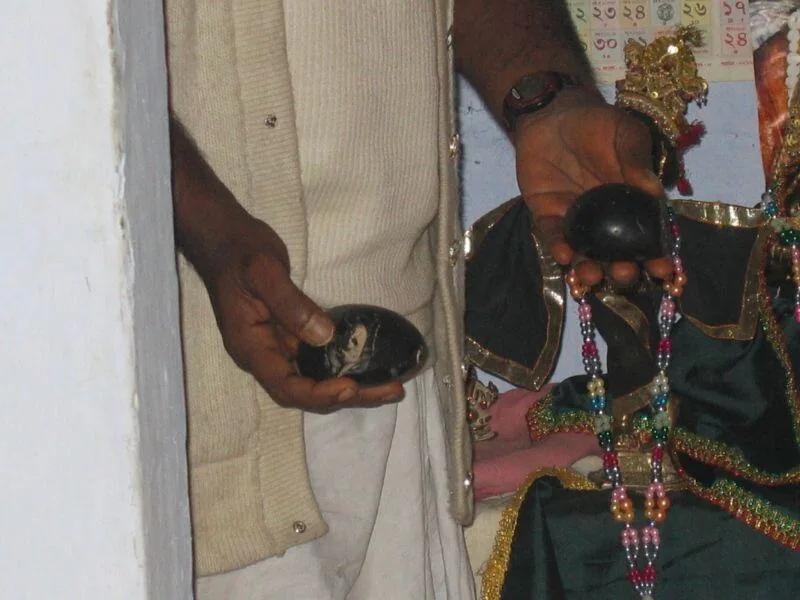
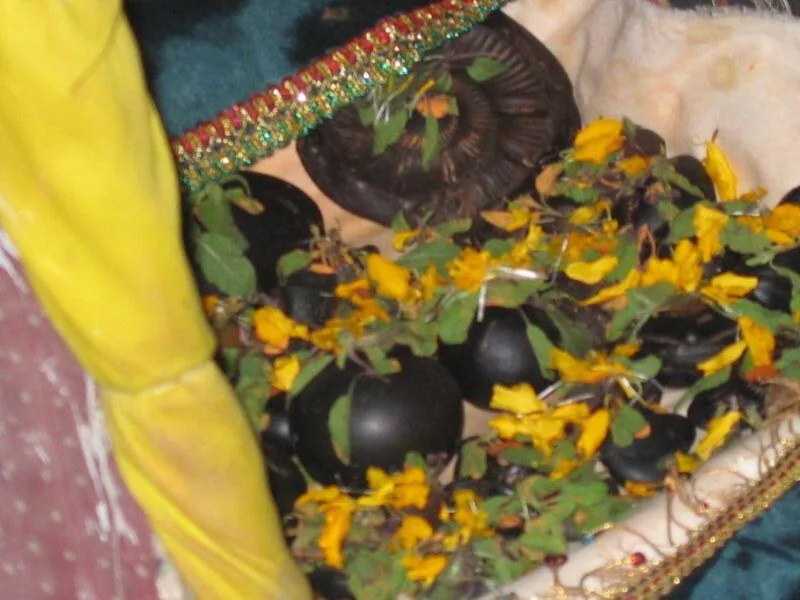
Image Credits and References
Images and source pages consulted: Gaudiya History biography and devotional art, Radha.name Samādhi Mandir gallery, and Gopala Bhatta Goswami overview.
Primary traditional sources named in the article tradition include Narahari Cakravartī's Bhakti-Ratnākara and the Gaura-parṣada-caritāvalī.